This is the first in a three-part series examining FC Barcelona's institutional evolution from a democratic community club to one of the world's most commercially complex sporting organisations.
There is a phrase in Catalan — Més que un club — that FC Barcelona has carried for over half a century. Translated, it means "More than a club." But what does that actually mean? How does a football club transcend the sport itself and become a vehicle for culture, language, and political identity? The answer begins not on a pitch, but in an advertisement placed in a Barcelona magazine in 1899.
The Swiss Accountant Who Built a Democracy
The story of FC Barcelona is inseparable from the story of Hans Max Gamper — a Swiss-born accountant, journalist, and athlete who arrived in Catalonia in 1898. Gamper had played football for FC Zürich and had a vision for what a club could be: not merely a sports team, but a civic institution governed by its own members.
On October 22, 1899, Gamper placed a now-legendary advertisement in the Barcelona sports magazine Los Deportes, calling for players to join a new football venture. The response led to a foundational meeting on November 29, 1899, at the Solé Gymnasium in Barcelona. Twelve men attended — a genuinely multicultural group of Swiss, English, German, and Catalan players — and Futbol Club Barcelona was formally established.
What made this foundation remarkable was not the club itself, but its governance structure. Gamper envisioned what he called a "democratic society" owned by its members — known in Catalan as socios. Every member would have a vote. Every president would be elected. The club would belong, in a very real legal sense, to its people.
Historians of the club — among them journalist Jimmy Burns, whose book Barça: A People's Passion remains one of the most thorough accounts of the institution — have consistently argued that the socio model was not merely an administrative arrangement, but an ideological commitment: the club existed to serve its community, not the interests of a private owner.
Crisis, Rescue, and the Establishment of the Socio Model
The early years were precarious. By 1908, Barcelona faced extinction. Membership had dwindled to just 38 individuals, debts were mounting, and the club was on the verge of dissolution. Gamper stepped in, assuming the presidency for the first of five terms. In a single year, he rebuilt the membership base to over two hundred members, establishing the socio not just as a fan but as the fundamental financial and institutional pillar of the club.
This crisis-and-recovery story set the template for the club's entire institutional history: democratic participation as both the cause of and the solution to its greatest challenges. The socios were the ones who had let the club drift — and the socios were the ones who saved it.
| Key Founding Event | Date | Significance |
|---|---|---|
| Advertisement in Los Deportes | October 22, 1899 | Gamper's public invitation to organize |
| Foundation Meeting, Solé Gymnasium | November 29, 1899 | Formal establishment; 12 founding members |
| First Silverware (Copa Macaya) | 1902 | Early validation of the sporting project |
| Gamper's First Presidency | 1908 | Rescue from insolvency; socio model cemented |
| Opening of "La Escopidora" Stadium | March 14, 1909 | First permanent home ground |
Under Gamper's stewardship through the 1920s, the club flourished. They hired their first full-time professional manager — the Englishman Jack Greenwell — and entered what historians describe as the club's first "Golden Age." But growth brought friction with authority.
Football as Political Resistance
The first indication that FC Barcelona would become something larger than a sports club came in 1925. Under the military dictatorship of General Miguel Primo de Rivera, the club's stadium was closed for six months after fans mocked the Spanish national anthem during a concert. Gamper himself was forced into exile.
This was not merely a disciplinary act against rowdy fans. It was a political signal. The Spanish state recognised that the Camp Nou's predecessor was becoming a space where Catalan identity — then being actively suppressed — could be openly expressed. The stands were a sanctuary.
The assassination of club president Josep Sunyol in 1936 — shot by Francoist forces at the outbreak of the Civil War — cemented this reality in blood. Sunyol, a Catalan nationalist politician and journalist, became a martyr figure: the moment when Barcelona's political dimension became impossible to separate from its sporting one.
"Més Que Un Club": The Franco Era and the Cultural Sanctuary
The dictatorship of Francisco Franco (1939–1975) represents the definitive period in which the Més que un club identity was forged. The Franco regime aggressively suppressed Catalan language, culture, and symbols. Public use of Catalan was illegal. The Senyera — the Catalan flag — could not be displayed.
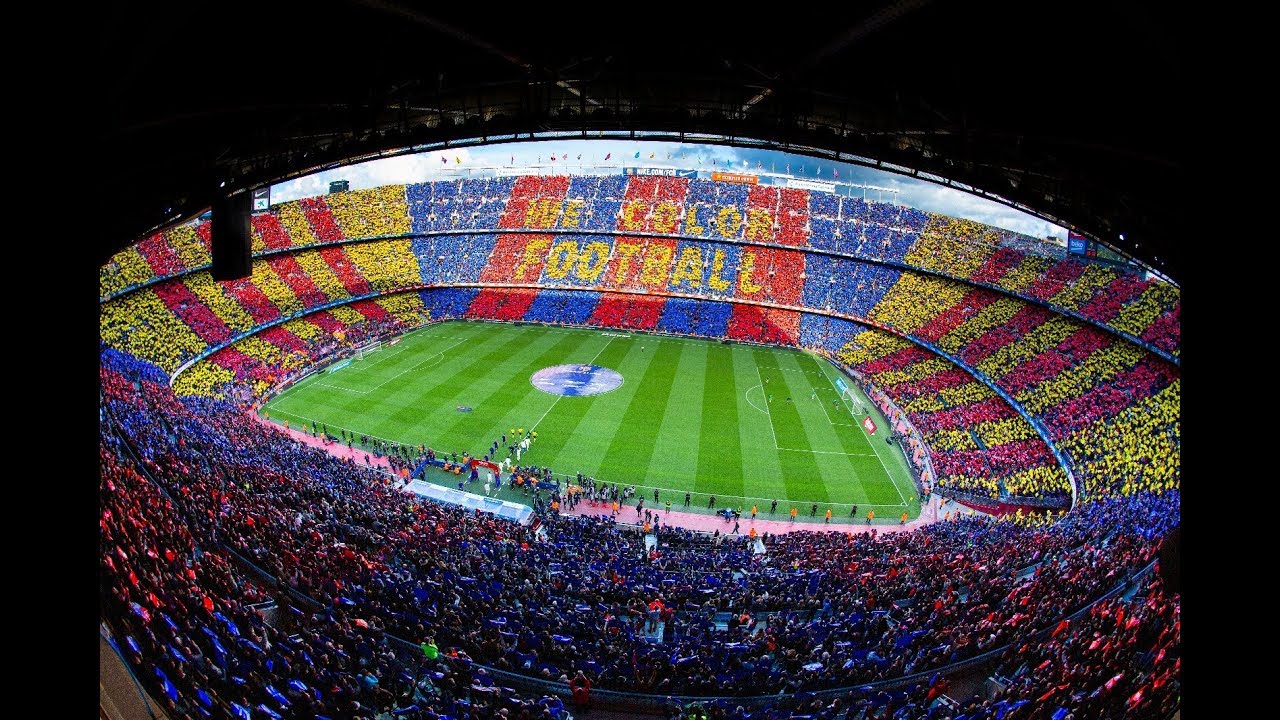
The Camp Nou became one of the only public spaces in Spain where this suppression could be openly defied. Fans sang in Catalan. They raised the Senyera within stadium walls. The club itself, while having to operate under Francoist regulations, maintained an institutional identity that served as what historians have called a "cultural guardian" for Catalan civil society.
The phrase "Més que un club" was formally articulated for the first time by President Narcís de Carreras during his acceptance speech on January 17, 1968, when he stated that Barcelona was "more than a football club… it is a spirit ingrained within us." The phrase resonated so profoundly because it described what Catalans already felt: that their club was carrying something the state was trying to destroy.
| Historical Era | Institutional Role | Primary Threat |
|---|---|---|
| Republic & Civil War (1931–1939) | Political identity; Sunyol's presidency | Fascist uprising; assassination |
| Francoist Repression (1940–1975) | Cultural sanctuary for Catalanism | Suppression of language and identity |
| Transition to Democracy (1975–1990s) | Stabilisation under Núñez; La Masia built | Emerging commercial pressures |
| Global Commercial Era (2000s–Present) | Global brand; financial restructuring | Debt, state-funded rival clubs |
The La Masia Philosophy: Continuity Through Identity
The 1970s transition to democracy coincided with one of the club's most consequential institutional decisions. Under president Josep Lluís Núñez, FC Barcelona established La Masia — its youth academy — in 1979, housed in an old farmhouse (masia) adjacent to the original Camp Nou.
La Masia was not simply a football school. It was a deliberate institutional strategy to produce players who embodied the club's values: technical intelligence, collective play, and a deep identification with the Barça culture. The philosophy was shaped by the influence of Johan Cruyff — who played for and later managed the club — and whose conviction that football should be expressive, positional, and intellectually driven became the ideological foundation of the academy.
The academy would, decades later, produce the core of arguably the greatest club team ever assembled — a generation of players including Xavi Hernández, Andrés Iniesta, Víctor Valdés, and a teenager from Rosario, Argentina, named Lionel Messi. But that story belongs in Part 2.
What the Foundation Tells Us
The institutional history of FC Barcelona's first century is a story about the power — and the fragility — of democratic ownership. The socio model survived military dictatorship, financial crisis, political exile, and assassinations precisely because it was rooted in a community rather than an individual owner or a corporation.
When the state tried to erase Catalan identity, the Camp Nou kept it alive. When commercial interests began circling European football in the 1990s and 2000s, the socios were the constitutional barrier against private acquisition.
The question that Part 2 will explore is what happens when the commercial pressures become so immense that even a democratic institution must compromise — not with a dictatorship, but with the global economy.
All sources for this three-part series are compiled at the end of Part 3.